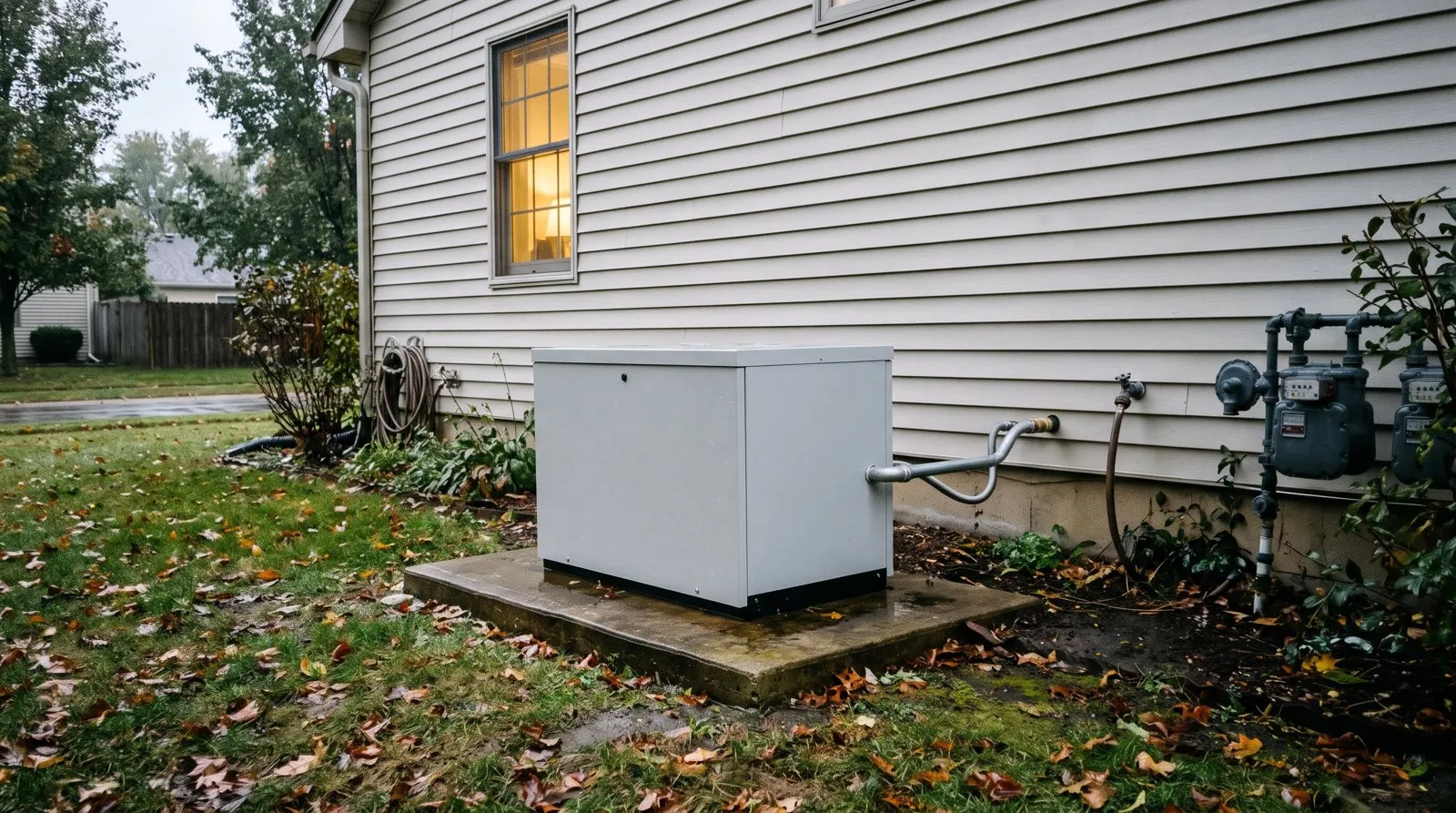
When the grid goes down, keep the circuits that matter.

Lights On Labs helps you choose between a power station, a portable generator, a standby generator and a home battery. Pick the appliances you need to keep running and size your backup around them.

Reader-supported and brand-neutral. How we make money

Your backup panel

Switch on what you need in an outage
Running load
836 W
Peak at startup
3,036 W
Runtime on 2 kWh
16.1 h

Watts from EWEB’s generator sizing sheet, with 85% of the battery usable after inverter losses. Use your own appliances

Four ways to back up a home

Each one trades cost, noise and runtime differently. Start with how long your outages usually last.

Compare the full cost of each
Power station, portable generator, standby generator and home battery compared
Power stationA big battery with outletsPortable generatorGasoline, propane or bothStandby generatorStarts on its own when the power failsHome batteryWired into your electrical panel
Price$499 to $2,799Store prices$499 to $4,899Store prices$4,999 to $8,515With a transfer switch$13,055 to $18,480Average installed quotes
InstallationNone. Plug in what you need.Extension cords, or $450 to $950 for an interlock kit an electrician puts in$1,650 to $5,400 for the electrician, permit and padAn installer, included in the quote
Runs forUntil the battery is empty. Solar panels can refill it.As long as you keep refueling itAs long as the gas line runs, or the propane tank lastsUntil the battery is empty. Solar can refill it by day.
NoiseSilent apart from the cooling fansLoud. Inverter models are quieter.An engine outside the house, plus a regular self-testSilent
Use indoorsYesNever. Carbon monoxide can kill in minutes.No. It sits on a pad outside.Indoors or outside, wherever the installer mounts it
Best forFridge, Wi-Fi and a CPAP through short outagesBig loads on a budgetThe whole house, hands-offQuiet backup alongside solar panels

Power station

A big battery with outlets

Price
$499 to $2,799Store prices
Installation
None. Plug in what you need.
Runs for
Until the battery is empty. Solar panels can refill it.
Noise
Silent apart from the cooling fans
Use indoors
Yes
Best for
Fridge, Wi-Fi and a CPAP through short outages
Best power stations

Portable generator

Gasoline, propane or both

Price
$499 to $4,899Store prices
Installation
Extension cords, or $450 to $950 for an interlock kit an electrician puts in
Runs for
As long as you keep refueling it
Noise
Loud. Inverter models are quieter.
Use indoors
Never. Carbon monoxide can kill in minutes.
Best for
Big loads on a budget
Best inverter generators

Standby generator

Starts on its own when the power fails

Price
$4,999 to $8,515With a transfer switch
Installation
$1,650 to $5,400 for the electrician, permit and pad
Runs for
As long as the gas line runs, or the propane tank lasts
Noise
An engine outside the house, plus a regular self-test
Use indoors
No. It sits on a pad outside.
Best for
The whole house, hands-off
Best standby generators

Home battery

Wired into your electrical panel

Price
$13,055 to $18,480Average installed quotes
Installation
An installer, included in the quote
Runs for
Until the battery is empty. Solar can refill it by day.
Noise
Silent
Use indoors
Indoors or outside, wherever the installer mounts it
Best for
Quiet backup alongside solar panels
Home batteries compared

Prices are the lowest and highest of the models we track, checked in October 2026. Installation ranges come from installers’ cost guides. The carbon monoxide guide has the CPSC’s rules for running a generator outside.

Tools that do the math

Free calculators and data built from manufacturer specs and public records. You don’t need an account.

How many watts does it use?

A motor needs a burst of extra power for a second or two when it starts. That surge is what trips a generator that’s too small.

All appliances and their sources

Running and extra startup watts for common appliances
ApplianceChartRunning + extra at startup
Refrigerator700 W + 2,200 W
Chest freezer700 W + 2,200 W
Sump pump, 1/3 hp800 W + 1,300 W
Well pump, 1/3 hp1,000 W + 2,000 W
Space heater1,500 W
Furnace blower, 1/3 hp700 W + 1,400 W
CPAP machine56 W

Generator sizing figures from EWEB, the same ones the runtime calculator uses. The label on your appliance has its exact rating.

Buying guides and research

All guides